Posted by Admin
February 10, 2026
AI Rap Lyrics Generators: How To Write Better Rap Bars with AI (2026 Guide)
Rap has always been all about conception, timing, and delivery. But the way rappers have developed those ideas over the last few years has started to change. AI rap-lyrics generators are now part of many creators’ writing processes, especially for artists who release content consistently on platforms like YouTube, TikTok, and SoundCloud.
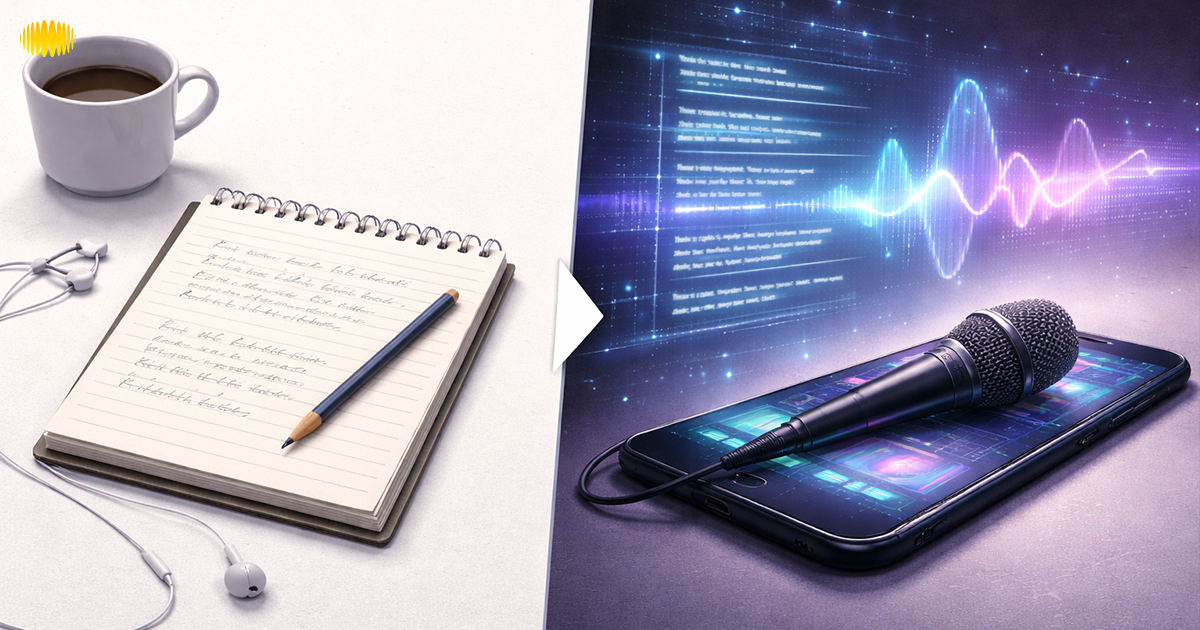
The appeal is obvious. For those days when inspiration comes less ideally, or writer’s block kicks in, an AI rap generator can spit out bars in seconds. Hooks, verses, even full song drafts are just a prompt away.” This comes as a kind of breakthrough to many creators.
At the same time, expectations must be realistic. AI can’t be a substitute for lyrics skills, good taste, and authenticity. It doesn’t know your life, it doesn’t know your voice, and it sure as hell does not know your audience as you do. What it can help you do is speed things up, find new angles, and maintain creative momentum when you hit a bump.
This guide breaks down how AI-powered rap lyrics generators actually operate, where they can be helpful, and where/how they may have limitations so that U.S.-based creators can use them responsibly without denying themselves originality or ownership.
What Are AI Rap Lyrics Generators (and What They Aren’t)
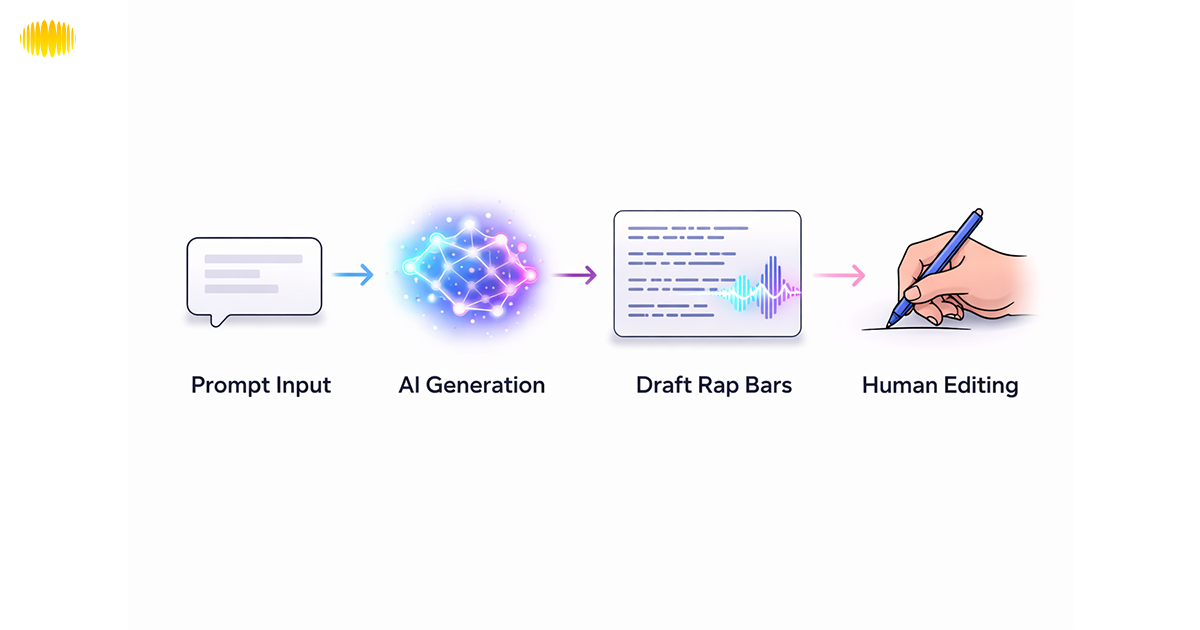
An AI rap lyrics generator is a tool that aims to generate rap lyrics specifically using given text prompts such as mood, topic, subgenre, rhyme style, or structure. Other than mere generic lyric tools, the systems are trained to understand and mimic rap conventions like bar counts, rhyme density, hooks, or verse structure.
What they are:
- Writing assistants that generate draft bars, hooks, or verses.
- Idea accelerators during writer’s block.
- Tools for exploring styles like trap, drill, boom bap, or melodic rap.
What they aren’t:
- Finished songs are ready for release.
- Substitutes for performance, flow control, or editing.
- Legal authors by default.
Many creators confuse all AI lyric tools as the same category, but there are two clear types you need to understand.
Lyrics-only generators
These tools only produce text. They are like a rap bar generator or freestyle rap generator in verse and chorus format. These verses or hooks can be later performed or refined yourself. Suitable for writers who have already got delivery and beats in mind to work off of.
Text-to-rap generators
These, in turn, take lyrics, vocals, beat, and melody to intertwine as they perform music. In other words, a rap song generator with voice or text is a robot specially designed for performance. This kind of software has been used as a tool for demos, experimentation, and getting rough drafts out of your head for many years now. This difference becomes important if you consider later on how to handle workflow, originality, and rights protection issues.
How AI Rap Lyrics Generators Work
At the technical level, most modern AI rap song generators are based on transformer-based language models. In other words, these programs study vast amounts of text for clues on how written or spoken language may be put together. The teaching materials they have used include rap lyrics, poetry, and text from everyday conversations.
They don't "know" rap culture. Rather, they predict what word order is both likely and appropriate through structure, rhythm, and previous examples. Your prompt is crucial. If you type in:
- Subgenre (trap, drill, boom bap).
- Bar count (for example, 16 bars plus a hook).
- Tone or perspective.
- Rhyme density.
The system uses those constraints to shape the output. Better prompts lead to better drafts. Vague prompts lead to generic bars.
Training data also matters. Because these models learn from existing lyrics, similarity risk exists if creators do not actively edit and personalize the output. This is why AI should be treated as a starting point, not a final writer.
Recommended Read: AI Songwriting: How to Write Songs Using AI (2026 Guide)
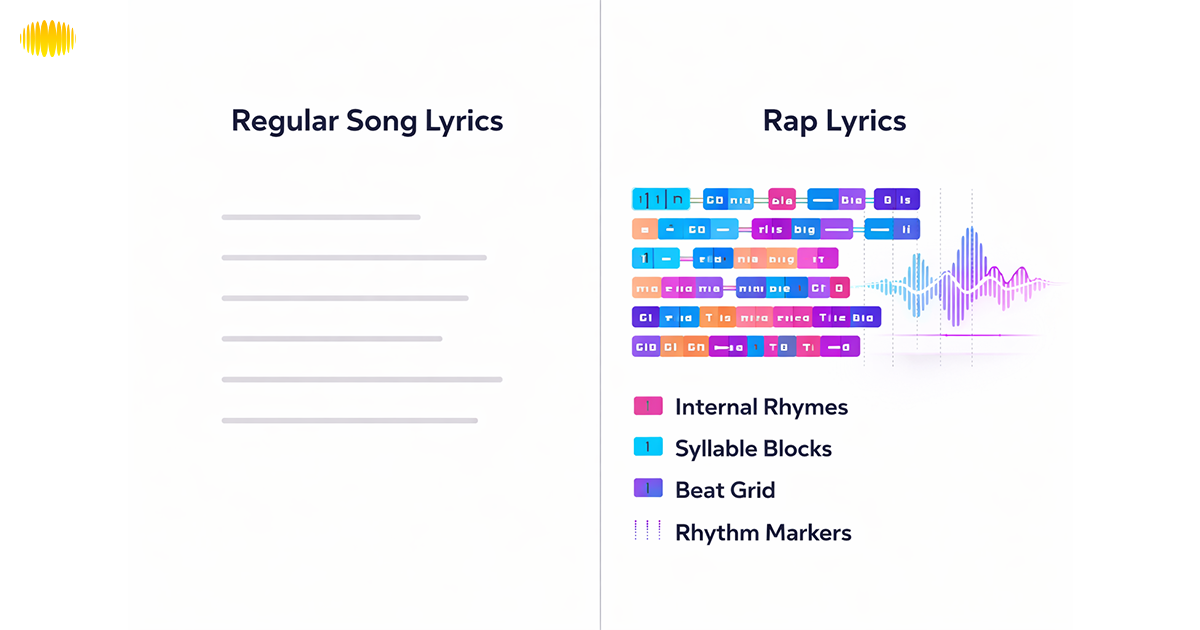
Why Rap Is Harder Than Regular Lyrics
Rap pushes language harder than most music genres. That is why generic lyric tools often fail when applied to hip-hop.
- Rhyme density: Rap relies heavily on internal and multisyllabic rhymes, not just end rhymes. Many AI tools default to simple patterns unless directed otherwise.
- Rhythm and stress: Bars need to sit correctly on a beat. Even well-written lines can fall apart if syllable stress is off.
- Breath control and pacing: Rappers think in breath units. Long AI-generated lines often need trimming to stay performable.
Because of this, a drill lyrics generator or boom bap lyrics generator built specifically for rap tends to outperform general lyric tools.
Best AI Rap Lyrics Generators (2026 Landscape)
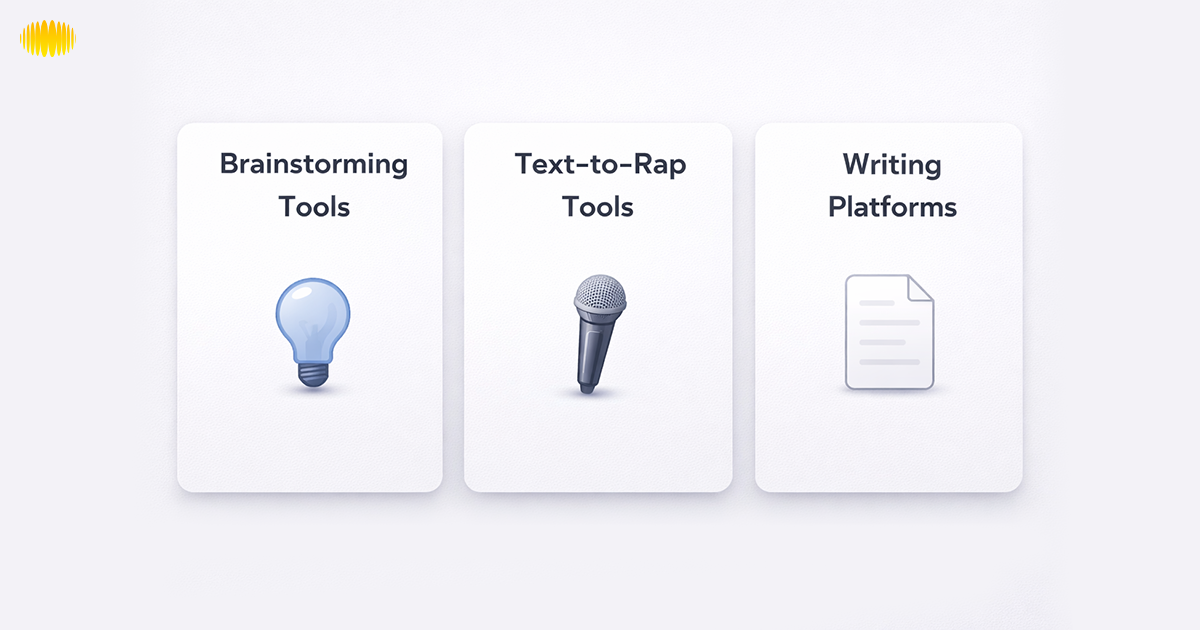
Instead of ranking tools by hype, it makes more sense to group AI rap lyrics generators by how creators actually use them.
Fast Brainstorming & Lyrics-Only Tools
Best for writers who want bars, hooks, or ideas they will later perform themselves.
- DeepBeat – focuses on rhyme matching and classic rap structures.
- NoteGPT Rap Generator – quick drafts with minimal setup.
- Word Studio Rap Generator – structured prompts with style control.
- RapPad AI – community-style lyric drafting with AI assistance.
Best for: writing sessions, freestyle practice, and refining bars over your own beats.
Full Demo / Text-to-Rap Generators
These tools generate lyrics and perform them with vocals and beats.
- Suno – end-to-end demo creation (lyrics → vocals → beat)
- Boomy – fast song demos with limited lyrical depth
- Soundful (rap presets) – beat-first workflow with lyric pairing
Best for: demos, concept testing, and hearing structure before recording.
Brand Platforms & Writing Suites
General creative platforms that include rap lyric generation as a feature.
- Canva Magic Write (rap prompts)
- Chat-style lyric assistants inside creator platforms
Best for: convenience inside an existing workflow, not deep rap writing.
Fast brainstorming tools
These focus on speed. They are useful when you want quick ideas, hooks, or rough drafts. Many free tools fall into this category, including options marketed as a free AI rap lyrics generator.
Full demo and text-to-rap tools
These combine lyrics with vocals and beats. They help creators hear structure and flow immediately, but require extra care when it comes to originality and ownership.
Brand platforms and writing suites
Some tools are part of larger content ecosystems. They offer convenience but may limit control over style or usage rights.
Feature Comparison Overview
This distinction becomes important later when discussing copyright and commercial use in the United States.
| Feature | Lyrics-only Tools | Text-to-Rap Tools |
|---|---|---|
| Output type | Written lyrics | Lyrics + vocals + beat |
| Rhyme control | Medium to high | Medium |
| Subgenre support | Trap, drill, boom bap common | Usually genre presets |
| Free limits | Often generous | Usually restricted |
| Ownership clarity | Depends on editing | Platform-specific |
| Best use case | Writing and refining bars | Demos and early drafts |
← Swipe horizontally to view full table →
Prompt Templates That Actually Produce Better Rap Bars
Most complaints about AI lyrics sounding generic come down to weak prompts. Strong structure produces stronger results.
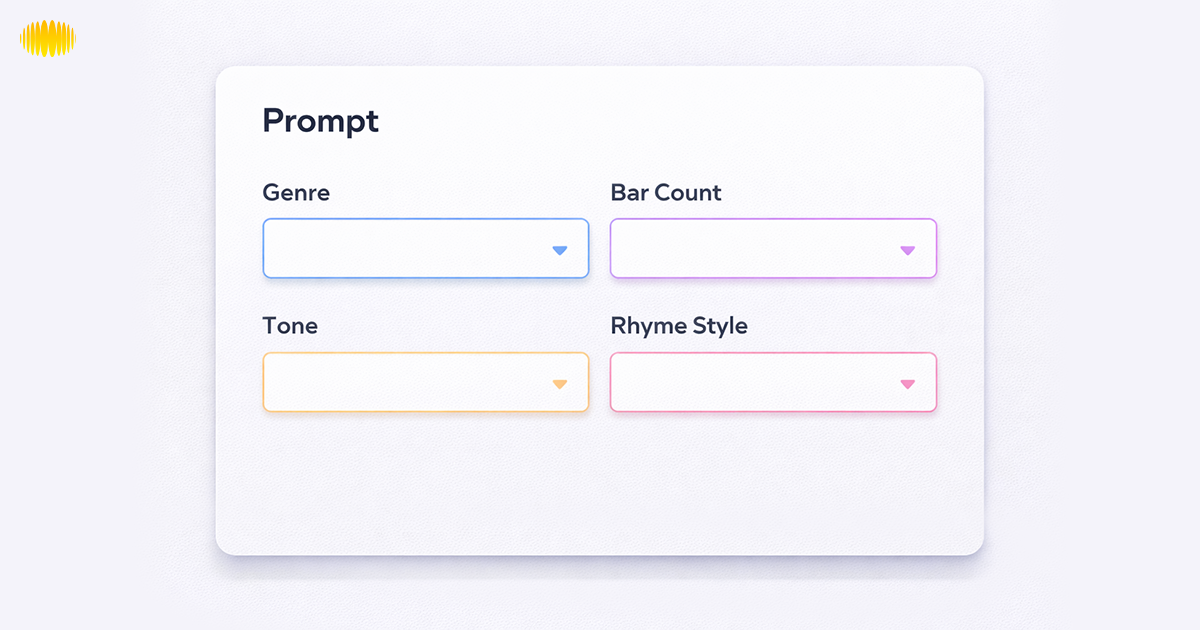
The “Rap Prompt Stack” Framework
Effective prompts usually include:
- Persona or point of view.
- Subgenres such as trap, drill, or boom bap.
- Bar count and structure.
- Rhyme style, including internal or multisyllabic rhymes.
- Tone controls like clean or explicit.
- Banned clichés to avoid overused phrases.
This framework works whether you are using a rap lyrics generator AI, a diss track generator, or a trap lyrics generator.
Copy and Paste Prompt Examples
Conscious / Storytelling
Write a 16-bar conscious rap verse. First-person storytelling, reflective tone, clear narrative arc, internal rhymes, no clichés, realistic emotion.
Battle / Diss
Write 12 aggressive battle bars. Sharp punchlines, layered wordplay, indirect insults, multisyllabic internals, confident delivery, no named artists.
Melodic Rap
Write a melodic rap verse with a catchy hook. Smooth cadence, emotional tone, simple end rhymes with light internals, clean language.
Editing Workflow: Turning AI Bars into Performable Lyrics
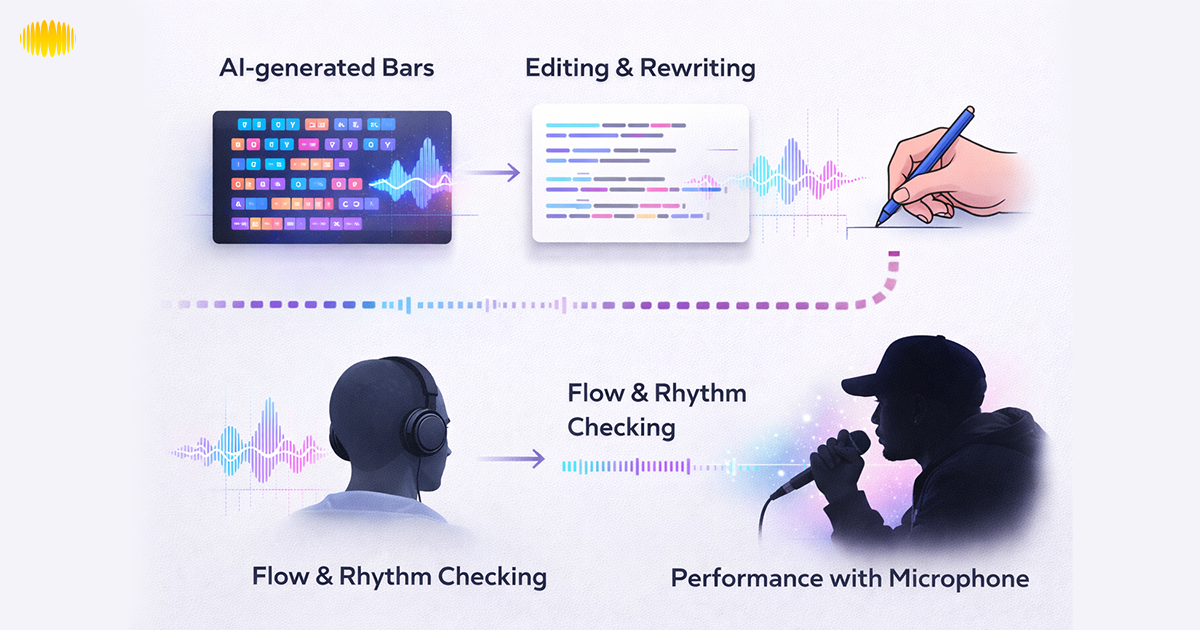
Generating bars is only the first step. The real work starts when you turn those lines into something you can actually rap on a beat. Creators who get the best results from AI rap lyrics generators treat the output as raw material, not finished lyrics.
Flow and Cadence Check
- Before thinking about punchlines or metaphors, check whether the bars fit.
Syllable counting
- Count syllables per bar and compare them against the beat’s tempo. AI often produces uneven line lengths that look fine on screen but fall apart when performed.
Stress marking
- Highlight stressed syllables and see where they land on the kick and snare. If stress placement feels awkward, rewrite the line rather than forcing delivery.
Reading to a beat
- Rap the bars out loud over a basic drum loop. This exposes breath issues and rushed phrasing faster than silent editing ever will. This step matters whether you are using a rap bars generator, a freestyle rap lyrics generator, or a more advanced tool.
Rhyme Density Upgrade
Most AI-generated lyrics rely too heavily on end rhymes. That is where they start sounding generic.
Add internal and multisyllabic rhymes
Take a plain line and layer internal rhymes inside it. You do not need to rewrite the entire bar. Often, replacing one or two words increases complexity immediately.
Avoid end-rhyme monotony
If every bar ends with the same sound, switch patterns mid-verse. Rap thrives on variation. AI gives you structure. You bring musicality.
Originality and Similarity Safety
One of the biggest concerns creators have is unintentionally copying existing lyrics. That concern is valid.
- Generate at least 3 versions of the same prompt.
- Combine lines from different drafts instead of using one output.
- Rewrite metaphors using your own experiences or imagery.
- Change perspective (first person → third person or vice versa)
- Adjust syllable counts to fit your natural delivery.
- Replace obvious phrases with personal language.
- Read bars out loud to check originality and flow
Copyright and Ownership of AI-Generated Rap Lyrics
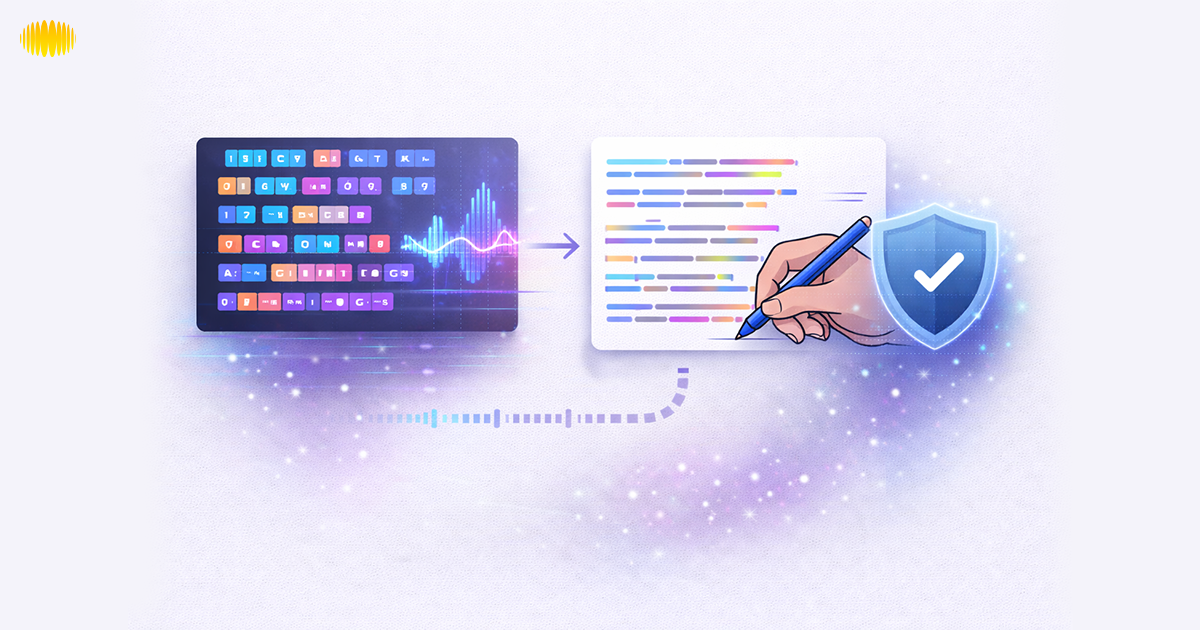
When registering, you can state that AI was used as a tool while clearly identifying your human creative contribution.
- Save drafts showing your edits and revisions.
- Keep notes on which bars you selected and rewrote
- Describe AI use as assistance, not authorship.
- Claim only the parts you selected, arranged, and modified.
- Do not claim protection for raw, unedited AI output.
Human Authorship Requirement
Under US copyright law, protection requires human authorship. Fully automated AI output, by itself, is not copyrightable. That does not mean you cannot use AI-assisted lyrics commercially. It means copyright depends on what you contribute.
Platform Permission vs Copyright
A platform may allow commercial use while still requiring human creative input for copyright protection. These are not the same thing.
- Platform permission tells you what the tool allows you to do under its terms.
- Copyrightability determines whether you can claim legal ownership.
How to Safely Claim Authorship
These actions demonstrate creative control. They matter if you ever register lyrics with the US Copyright Office or face a dispute. For creators planning to release music publicly, AI should always be positioned as an assistant, not the sole author. To strengthen authorship claims:
- Select which bars to keep.
- Arrange verses and hooks intentionally.
- Modify wording, flow, and structure.
Conclusion
AI is indeed altering the way rap lyrics are composed, but it does nothing to alter what makes rap real. Your voice, your experience, and your ability to deliver still trump any tool. The best creators use A.’s own AI rap-lyrics generators as co-writers.
They spur ideas, unstop creative bottlenecks, and hasten early drafts. Then they edit, tinker, and act with intention. Used responsibly, AI actually buttresses creativity rather than replaces it. Learn the workflow. Edit aggressively. Understand the legal boundaries. You want to use AI without losing your voice, and that’s how you do it.
Frequently Asked Questions (FAQ’s)
1. What do AI rap lyrics generators do?
AI rap lyrics generators are products that allow artists to generate rap bars, hooks, and verses with the help of artificial intelligence trained on language and rhyme schemes. They help with the form and the ideas, but they still need human editing to be performable and original.
2. How do AI lyric generators even work to create rap lyrics?
They produce lyrics by predicting sequences of words given prompts, such as topic, style, bar count, and tone. These tools are a function of language, not music, which is why creators have to edit flow, rhythm, and delivery by hand.
3. Are AI rap lyrics copyrighted in the US?
In the US, copyright demands human authorship. Fully automated AI-generated content is not shielded. That means lyrics (which are intentionally chosen, altered, arranged, and rewritten by a human creator) can be copyright-protected.
4. Can I commercially use rap lyrics generated with AI?
Here’s the short version: you can use AI-assisted lyrics commercially if the platform permits it and you make significant changes to what spits out. Commercial safety hinges on what commercial use the tool is subjected to and how much human creativity has contributed.
5. What’s the best AI rap lyrics generator that’s free for quick drafts?
Free AI- generated rap lyrics are great for brainstorming and drafting, but they have no soul. They can be used to generate ideas fast, but they tend to result in common wording that will still need some editing before being made public or commercial.
6. How do I get AI to generate rap lyrics that sound less stereotypical?
Use formatted prompts, regenerate a few drafts, rewrite internal rhymes, modify syllable amount, and read the vocals over a beat. Never publish first-pass output. Editing oneself is crucial for authenticity and excellence.
7. Is it OK to use actual rapper names as prompts?
We recommend that you stay away from actual rapper names. That increases the chance of it being similar to existing lyrics. Summary quality features like tempo, rhyme density, mood, or tone, instead, can be described to keep the response original.
8. Are AI rap generators able to produce complete tracks with both lyrics and beats?
Some tools are able to produce demo tracks with vocals and beats. These are great for testing ideas and hearing structure, but final releases will generally need real human vocals along with production and mixing.