Posted by Admin
February 19, 2026
Case Study: How Content Creators Use AI Music to Go Viral on TikTok
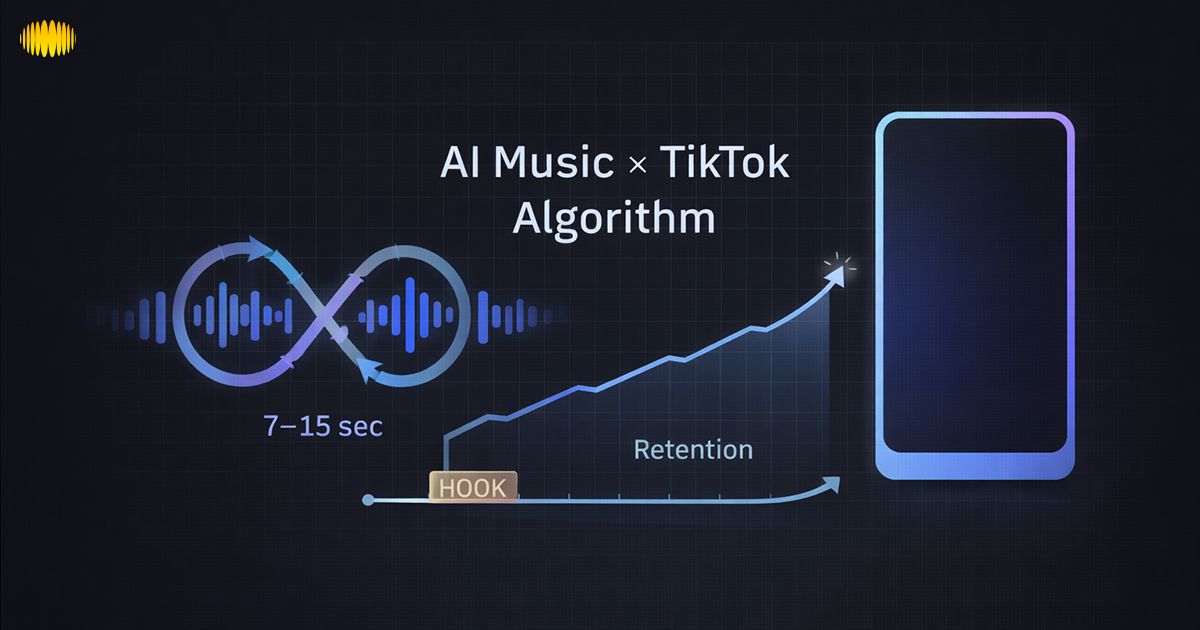
Earworms are not uncommon; studies indicate that they occur in about 72 to 92 percent of individuals. TikTok uses the tactic of leveraging such a habit loop by rewarding quick recognition and ineffective replays. TikTok itself has stated that early interactions, such as replays, are used to make the For You feed recommend the next. That is why AI music TikTok content is no longer a gimmick among creators. It is a fast testing engine to build a 7 to 15-second hook loop, like a clean loop, and reuse it, and train your algorithm to distribute your sound as a template.
This case study reveals the TikTok viral music strategy to those victories, the TikTok algorithm for music signal distribution, and the earworm dynamics that have a 10-second hook driving an entire series. You will find three case-style stories with realistic measurements, a monetization map, which also entails the TikTok Creator Rewards Program, legal clarity, and an implementation process of Sonygram as an AI song generator in creator mode.
Why TikTok And AI Music Are Changing The Game
TikTok does not rank videos by number of followers, but their behavior and 2026 breakdowns continue to indicate that completion, rewatch rate, and search intent are leading factors. Sound actions also count. Reuse, saves, and taps inform TikTok that your audio is of template value, and template value has the potential to triple reach. AI music to creators accelerates content testing, as you can create several hook variations, make controlled tests, and scale the winner.
Recommended Read: How To Choose The Right AI Music Generator
TikTok Algorithm 2026: Signals That Matter
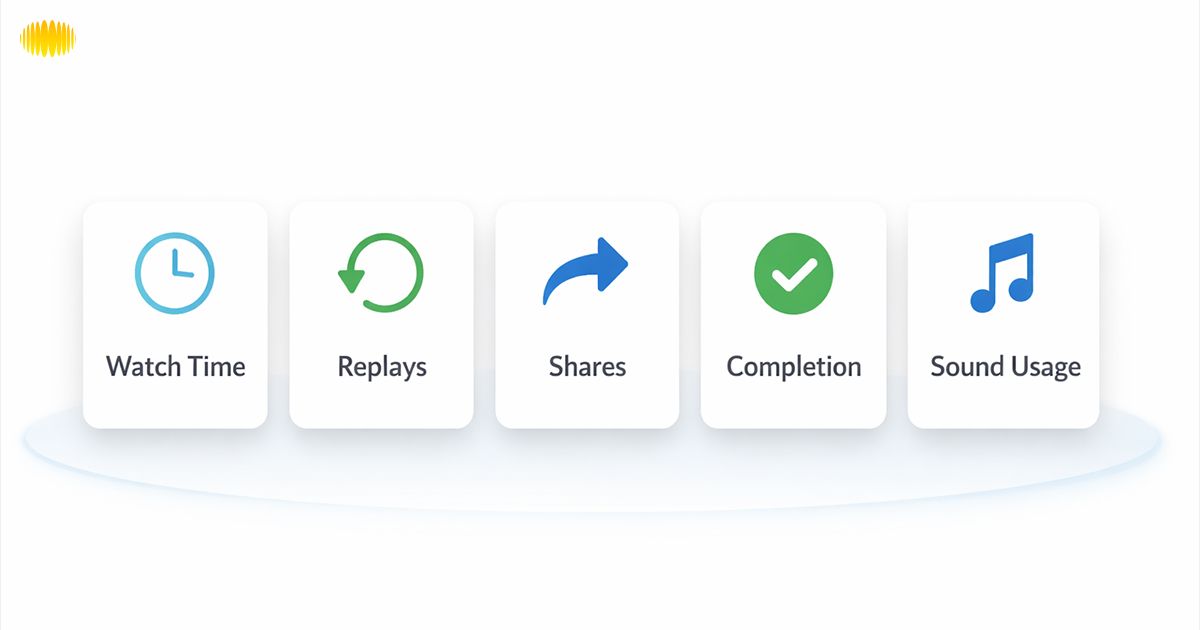
Creators who treat the feed like a lab watch the same signals TikTok watches. These signals are enhanced by a tight AI TikTok music plan with intent. Here’s how tiktok algorithm works in 2026:
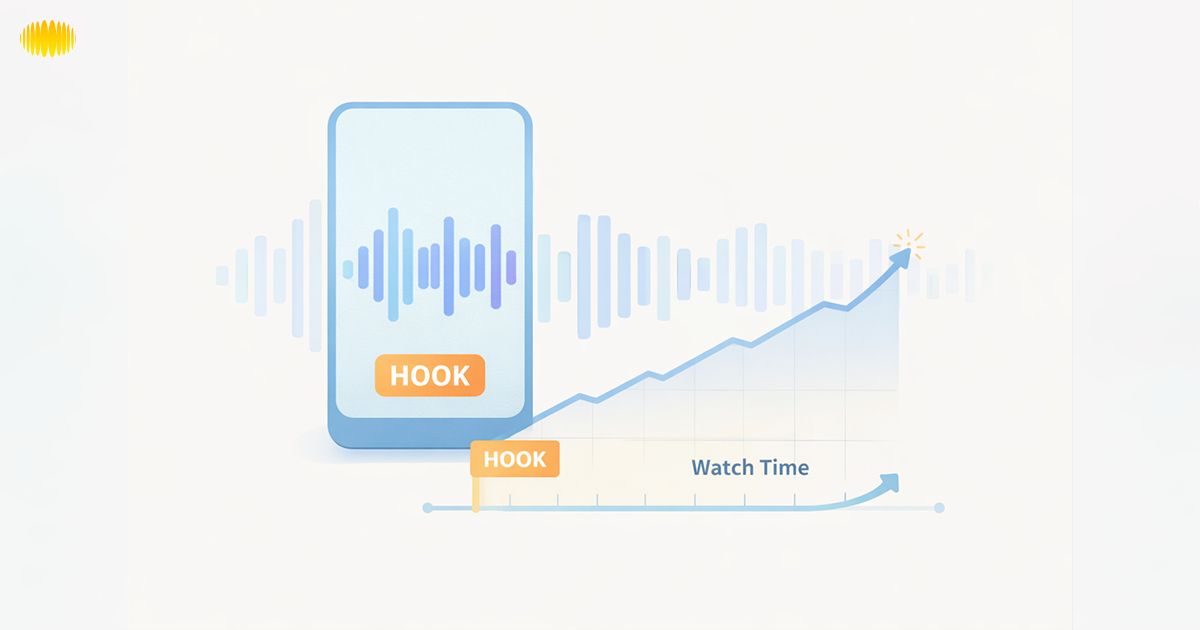
- Watch Time: Average watch time and total watch time provide real attention, particularly in the beginning.
- Replays: Rewatch rate is an indication that the hook, text, or edit was rewarded for re-read.
- Shares: Shares are an indicator of social value and test new clusters.
- Comments: It is important to have depth when the viewers comment on the sound or quote the hook.
- Completion Rate: A good finish rate would make the system know that your structure worked.
- Interaction History: TikTok will match your post to users who acted the same way in the past.
- Sound Usage: Taps, saves, and user videos made using your audio can make one post a trend.
The metrics that decide distribution
- Completion thresholds: On short loops, the gatekeeper has a high completion rate. Viewer dropouts before the finish line will put a halt to reaching. (Working benchmark 100 of less than 20s hooks = 70%+ completion).
- First 2 seconds: The hook should be seen by the viewer first before making the decision. Use 0-2s as a qualifying window.
- Retention curve: This should be a flat curve rather than a spike. TikTok treats a collapsing retention in the middle of the video as a mismatch.
- Loop trigger psychology: A continuous final beat, which resolves into the beat one, causes replays to feel automatic, and plays then behave like a powerful interest signal.
- Reuse behavior of audio: Sound taps, saves, and videos created by the user with your audio are like a template value, and these can expand to a wider audience than your group of followers.
Distribution after traction can be assisted by the size of followers, but can be surpassed by relevance and retention.
Psychological Hooks: The Science of Earworms
Earworms are brief pieces of music, and they play in your head without struggle. Studies of involuntary musical imagery also associate earworms with simple, singable forms, repetitive patterns, and quicker tempos, with one minor twist that can maintain the brain's attention.
Writers can do so without any great philosophy. Repetition in the short term assists the brain in predicting the pattern. Prediction and payoff form a small loop of reward, and replay is the simplest method of receiving that same payoff again. It is strengthened with memory association. Combine a hook and a revelation, reaction, or an after-cut before and after, and the sound will be the catalyst of the activity. Beat cuts are gratifying, and this can boost the completion and replay.
It is just a case of reward prediction: the brain learns the pattern, and then a small reward is provided when the pattern is solved. A small surprise (a lift, a pause, a vocal glitch) will create tension and payoff, resulting in the second watch feeling not incidental but justified. The earworm study also demonstrates that repetition and a twist are the standard ingredients of involuntary replay in the mind, which fits closely into 7-15 second TikTok loops.
This is the reason why AI-generated music viral clips tend to employ 7-15 second loops, hit the hook early, and then close with a seam that appears as a circle.
Recommended Read: AI Songwriting
Case Study #1: Bedroom Beatmaker to Viral Trendsetter
- Background: One of the bedroom beatmakers wrote a post in a very small niche, loops to editors, product edits, and fast cuts. Views remained at 900 to 2,500, and retention declined due to the optimal part being shown late.
- Problem: Before the hook came, people scrolled. Sound reuse remained close to zero; the creator never achieved the network effect that makes AI music TikTok work at scale.
- AI Music Experiment: Ten variants of hooks were created through an AI song generator for creators. Rhythm and bass beat remained the same. Only the lead motif changed. Each export was a 15-second loop. One hook was victorious since it had a two-note motif repeated three times, then rose towards the end, thus the restart was natural, fitting the earworm pattern of simple plus twist.
- Posting Strategy: There was an initial hook at 0.0 seconds. Cuts hit the kick. There was also a direct use case provided on-screen: “Use this for a before/after.” One of the pinned comments instructed editors to create using the sound and tag the page. Early adopters were stitched very fast, and this compelled more creators to test the audio.
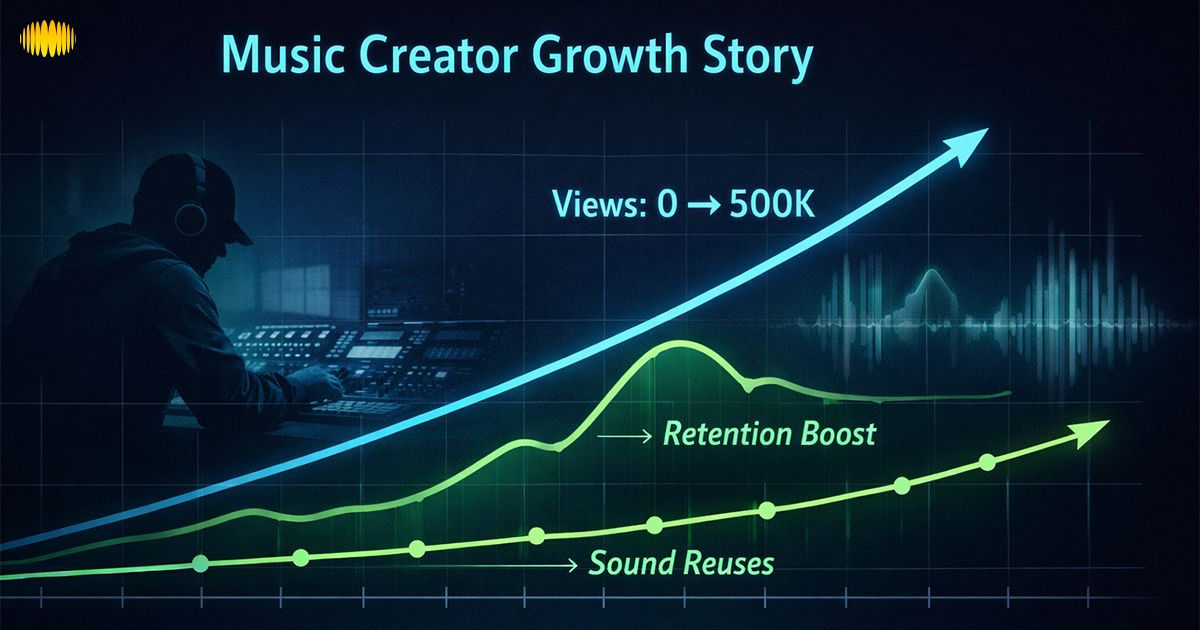
- Metrics Achieved: One post gained 0 views to 500,000 views in six days. Engagement rate reached 6.8%. Usage of sound went beyond 2,400 creator videos within two weeks. Followers grew by +18,200 in 30 days.
- Timeline: Day 1 tested 3 hook variants with instant 0.0 second open, Day 2 pushed creator tagging via pinned comment, Day 6 breakout hit 500,000 views, Day 14 sound reuse crossed 2,400 videos.
- Before vs after: Posting frequency moved from 3 posts/week to 7 posts/week during testing.
- Retention lift: Average watch time moved from 4.5s to 9.8s on a 15s loop, with follower conversion at 3.6% of viewers to profile visits.
- Why It Worked: The hook was instantly readable and looped well. The absence of emotion meant it could be used in niches, and the ability to repeat pushed replays.
- Monetization Outcome: The creator has sold a small royalty-free AI music license pack to editors, followed by entering AI music distribution to allow the entire track to survive on streaming platforms.
Case Study #2: Educational Creator Turns Lectures Into Songs
- Background: Short explainers were created by an educational creator regarding hard topics. The value was excellent, but the opening was lecture-like, hence behaviour remained high.
- Problem: There was no definite reward in the first seconds, and it negatively affected completion and replays.
- AI Music Experiment: Every lesson was turned into 10 seconds of a summary hook, chanted with steadfast rhythm, followed by a repetition of the same at the conclusion of the lesson in the form of a recap. An AI song generator was used to create multiple hook takes, and the creators retained one sonic identity throughout the series. The identity made it easier to recognise and scroll less.
- Posting Strategy: The video began with an intro. Teaching ran for 40 to 60 seconds. The hook returned as a recap. Some captions corresponded to the rhythm to ensure the silent viewers remained in sync. One of the comments requested the viewer to duet the hook with their own examples, pushing sound taps and reuse.
- Metrics Achieved: The time spent on the watch increased from 18 to 22 seconds to 34 to 41 seconds on the similar length posts. The rate of completion increased by 19% throughout the series. Comments were more specific, and this raised the velocity of engagement.
- Timeline: Day 1 tested 3 summary hook takes, Day 3 locked the winning sonic identity for the series, Day 7 duet prompt increased engagement velocity, Day 14 retention and completion rates stabilized at higher levels.
- Before vs after: Posting frequency moved from 2 posts/week to 5 posts/week during testing.
- Retention lift: Average watch time moved from 18 to 22 seconds to 34 to 41 seconds, and hook return increased replays from 1.05 to 1.18 plays per viewer.
- Why It Worked: Music earworms were supported by repetition, and the recap increased the feeling of satisfaction when starting again, so the replay behavior increased.
- Monetization Outcome: The TikTok Creator Rewards Program model yielded better payouts based on qualified views and RPM, and longer videos tend to work better within the program. A learning brand also got in touch with the creator after he demonstrated steady retention on several posts.
Case Study #3: Lifestyle Vlogger Launches A Viral Challenge
- Background: Morning resets, habit stacks, and day-in-the-life edits were some of the posts of a lifestyle vlogger. Views were consistent, but nothing provoked copying.
- Problem: The content looked clean, but it can be interchanged. There was no template that the other people wanted to repeat.
- AI Music Experiment: A 12-second hook of the chant was created, and an intentional pause was created at the sixth second. The silence provided a space of duets, stitches, or text punchlines, transforming the sound into a structure.
- Posting Strategy: On the first day, the rule was brought up in a single line. Day two exhibited three variations with the same sound. On day three, ten micro-creators were seeded. The fourth day saw the most successful entries and nailed them. Captions incorporated simple search terminology to ensure that individuals could identify the challenge in the future by typing the hook line.
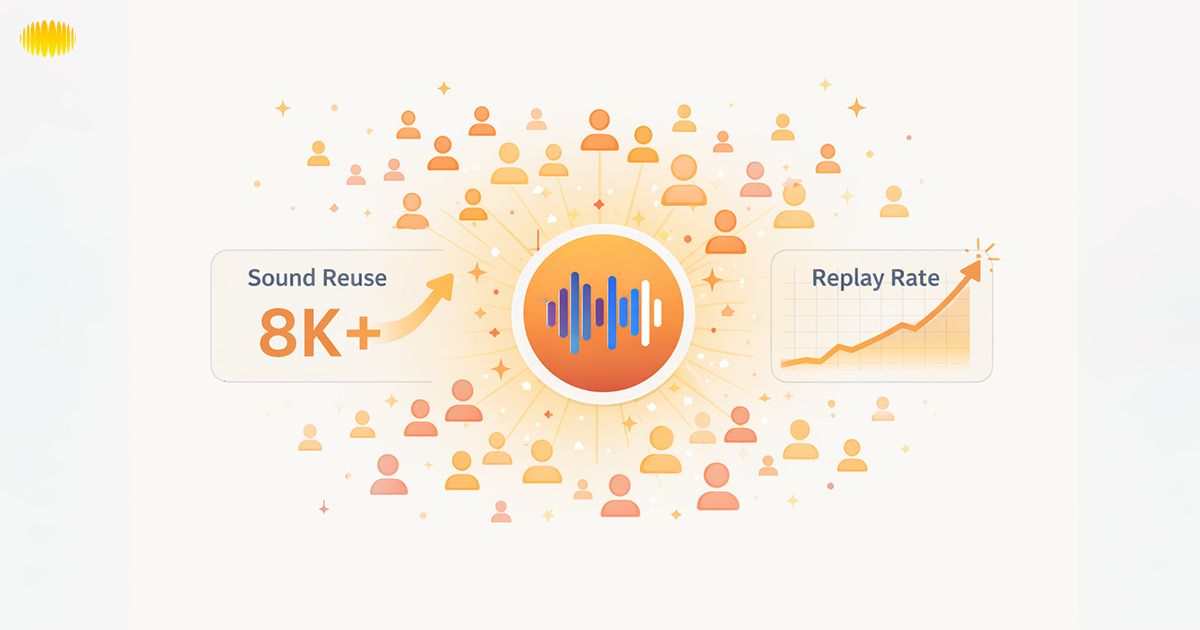
- Metrics Achieved: The Replay behaviour increased to 1.25 to 1.45 plays per viewer. The use of sound passed over 8,000+ videos within two weeks. There was an increase in followers by +62,000 within the same window.
- Timeline: Day 1 introduced the challenge rule, Day 3 seeded 10 micro-creators, Day 4 amplified top entries, Day 14 reuse surpassed 8,000 videos with rapid follower growth.
- Before vs after: Posting frequency moved from 4 posts/week to 10 posts/week during testing, with qualified CTA posts per day at 1, 3, 1, 1.
- Retention lift: Replay behaviour increased to 1.25 to 1.45 plays per viewer, plus follower growth rate per week rose to about +31,000/week during the two-week window.
- Why It Worked: The use of Identity and a collaboration slot allowed reuse to be quite simple. The two key motivators of 2026 guides identify rewatch rate and completion, and the loop seam facilitated both.
- Monetization Outcome: Brand partnerships ensued owing to the fact that the challenge was repeatable. Affiliate products made by TikTok Shop were overlaid, and gifts were added to LIVE sessions with the help of challenge reviews.
Platform Mechanics And Best Practices
A TikTok viral music strategy can be repeated and begins with audio design, followed by the edit that converts audio to retention. Strong hooks in the beginning, watch time, and content that leaves the viewer with enough curiosity to watch it to the end are usually rewarded by TikTok.
- Ideal Hook Length: 7 to 15 seconds for loopability and reuse.
- Hook Placement: Put the hook in the first or second, not after a slow intro.
- Loop Ending Technique: Have the final beat transition into beat one, and cut tails that fade the line.
- Emotional Alignment: Calm to reset, confident to glow-up, tense to plot twist.
- Caption and Audio Synergy: Name the vibe and format, and inform the viewers on what to do with the sound.
- Native Editing: Beat-synced cuts are more likely to elevate completion and replays.
- Posting As Testing: Complete three hook tests per week. It turns into the sound of a winner.
Recommended Read: Best AI Music Generators 2026
Monetization Breakdown for AI-Driven Virality
Money comes after protracted focus, then comes the demonstration that you can obtain the result again. AI music for content creators is useful since you can create music on your own and reuse it in different posts.
Stacking Framework
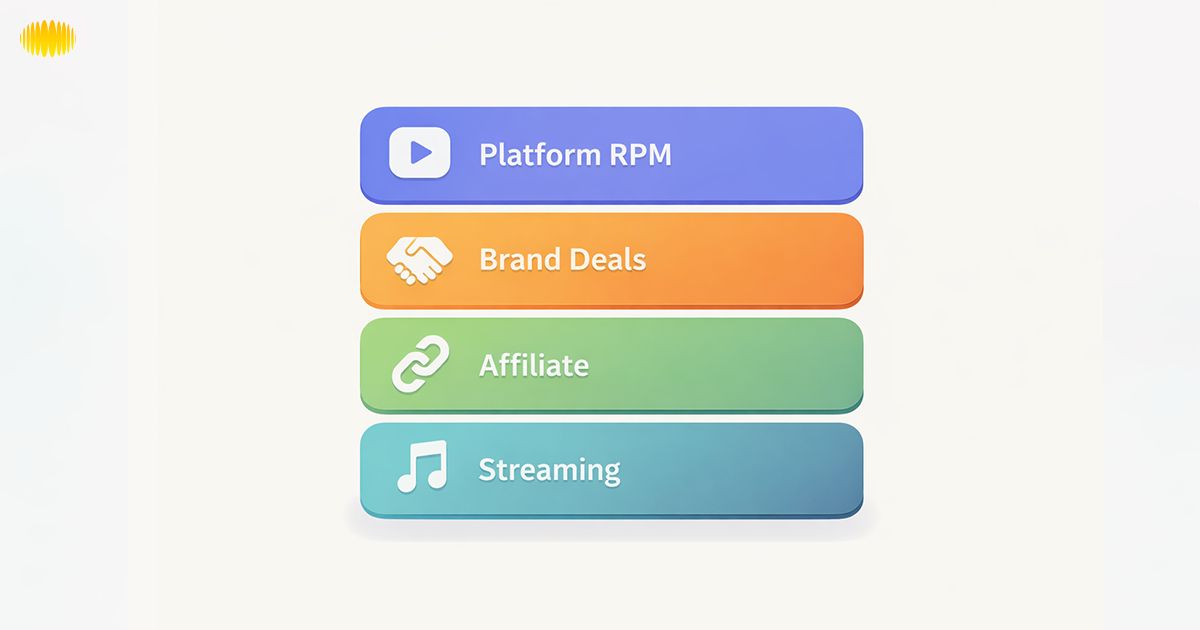
- Layer 1 platform RPM (qualified views)
- Layer 2 deal revenue (usage rights, whitelisting, exclusivity)
- Layer 3 commerce (affiliate, TikTok Shop)
- Layer 4 off-platform (streaming, packs, licensing)
Scenario Example: 1M qualified-view month in an RPM range generates platform revenue, followed by 1 mid-tier brand deal with continued affiliate, which can be better than RPM only. Take RPM as a variable and construct 2 or 3 parallel revenue lanes.
Creator Rewards
The TikTok Creator Rewards Program is present in most guides, with the qualification of views multiplied by RPM, in the case of original videos, usually with a minimum duration of one minute. Approximately $0.40 to $1.00 per 1,000 qualified views is touted as a planning range, although RPM changes depending on niche and retention.
Brand Deals
Planning scales differ according to the deliverables and usage rights, but a common band that many groups use appears as:
- Micro Creators: $200 to $1,500 per post
- Mid-tier Creators: $1,500 to $10,000 per post
- Larger Creators: $10,000+ per post, usually as a package.
Affiliate and TikTok Shop
The commission is plan and category-based. The ads on TikTok allow centering notes commission rates of 1-80 percent, and this implies that negotiation and product selection are important.
Streaming Royalties
AI music distribution transforms an established hook into a complete song on Spotify and Apple Music. A robust stack mixed program revenue, deals, affiliate, and distribution means that no channel has all of it.
Recommended Read: Technical Challenges and Ethical Issues in AI Music Generation
Legal And Ethical Considerations
Right errors are capable of silencing a sound in its trend. Another safe worker tries to view licensing as a checklist.
- Copyright Enforcement: Audio muting or takedowns can be caused by a dispute due to copyright enforcement.
- Royalty-Free AI Music: Confirm the license covers commercial use and platform use.
- Ownership Clarity: Save prompts, exports, timestamps, and version notes as proof.
- Distribution Rights: Certify terms in advance before uploading streams; AI music distribution requires the rights.
WIPO has pointed to the issue of AI making the process of royalties and compensation more complex, an important reminder that clarity of rights is important when money is involved.
Implementation Guide: Generating Viral AI Tracks with Sonygram
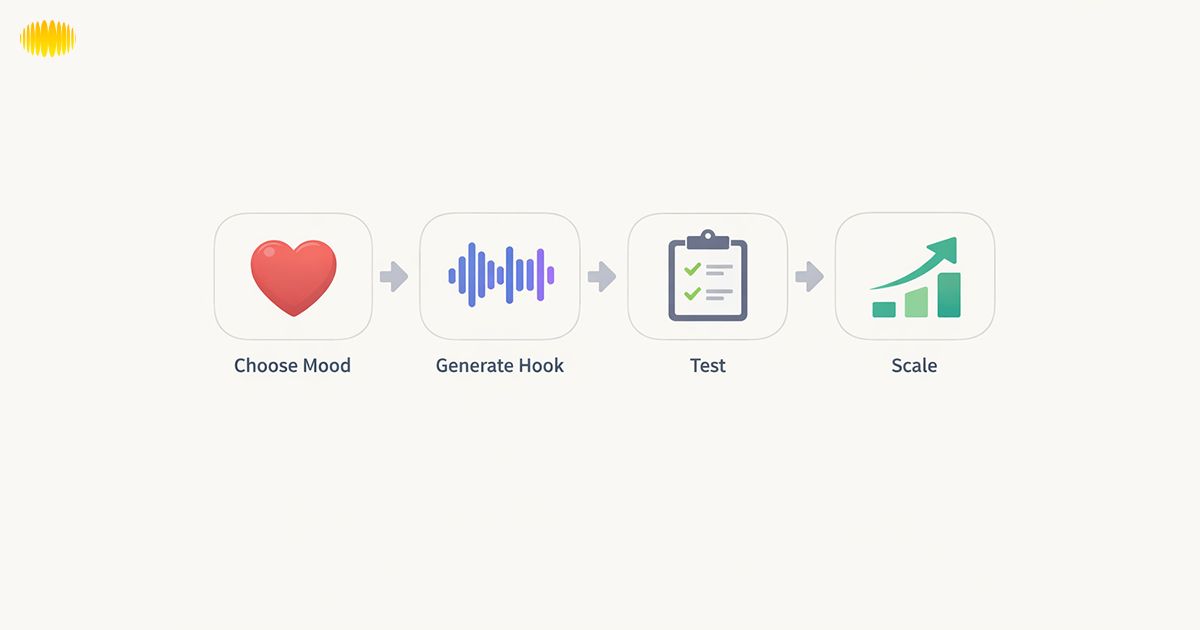
The actual benefit of an AI song generator for creators is a fast testing workflow.
- Choose Mood: Select one emotion that corresponds to an established format.
- Select Tempo: Set tempo at a constant rate to allow cuts to fall on the beat.
- Generate a Short Loop: Build a 10-15 second hook first.
- Adjust Hook Intensity: Then simplify the motif, and add a twist towards the end.
- Export 15 Seconds: This check examines the seam, followed by a fix of harsh restart.
- Test Variants: Alter one variable in each version.
- A/B construct: Run 3 hooks using the same visuals and captions. Kill any version that drops below 2 seconds. Select the winner based on completion and replays, sound taps, and dislikes.
- Repost rule: When a hook performs well, but the post is underperforming, re-post the hook with the same first frame and a stronger loop within 48 to 72 hours, then compare retention curves.
- Track Analytics: Watch time, replays, shares, comments, and sound taps.
- Scale the Winner: Invite reuse, and release under AI music distribution when it is proven that there is demand.
Sonygram remains in the background. The analytics and the feed determine what is worth scaling.
Also Browse: See A Real Example Of AI Song Generation In Action
Frequently Asked Questions (FAQ’s)
1. How Does the TikTok Algorithm Rank Music?
Behavior drives ranking. Sound taps, preserves, and reuses the signal template value, which may broaden distribution.
2. What Length Works Best For Viral Music?
The AI music TikTok growing time should be 7 to 15 seconds, since it loops and sounds smooth and easy to repeat.
3. Can AI-Generated Music Be Monetized?
Yes, monetization is possible when there are rights to commercial use. The TikTok Creator Rewards Program, brand deals, affiliate and TikTok Shop, and streaming through AI music distribution can serve as sources of revenue.
4. How Much Does TikTok Pay?
Creator Rewards employs qualified views and RPM. Numerous summaries use a range of about $0.40-1.00 per 1000 qualified views as a planning range, but the retention and niche of RPM.
5. Can I Distribute AI Music On Spotify?
Yes, in case your license allows.
6. What Makes A Song Go Viral?
A brief recurring motif, a non-seamless end, one turn to cause earworms in music, and a format that can be copied by other creators.
Conclusion: Experiment, Iterate And Monetize
Growth in AI music on TikTok does not seem random when you trace the indicators that flow distribution. The scoreboard is composed of watch time, completion, replays, shares, and sound usage. These three cases were consistent across niches: create a short hook, invite to reuse, and invite to become an early adopter, and then translate reach into revenue using the TikTok Creator Rewards Program, offers, affiliates, and AI music distribution. Sonygram assists you in creating variants at a very fast pace, and then analytics informs you on what to scale.