Posted by Admin
February 13, 2026
Sad Song Generator: Create Emotional Music with AI
Cold tea on the desk. The screen glows at 2:10 AM. Some line is running in your head, and it is painting in a particular manner, “not generically sad.” Thus, the search falls on the sad song generator. The real goal is simple. Create a song that feels like your moment, not a slow piano bed that suits all the clips. Producers must have sad background music that will be beneath a voice-over and still be significant. The authors need lyrics that contain a scene, something, a little gesture that means a lot.
Numerous AI music generators with vocal tools are capable of creating a song within a short period of time, and after that, the emotion is produced smoothly and without fillers. The sadness is constructed into the minor decisions. That half- resolution of the chord. The breathing close vocal. A pause was placed on purpose.
It is a guide that will give you a clear track over the noise. The types of tools, a fast pick and a quick stack, help people to grieve, feel remorse, feel longing, or experience numbness. Following comes the question of which guides go missing. Editing. Shaping. Making it sound human.
Recommended Read: AI Songwriting: How to Write Songs Using AI
What a Sad Song Generator Is
A sad music generator is an AI tool that will assist you in producing sad music. That can be the words of a song, a whole background music, or a whole vocal track. The issue is that because of the clueless names of tools, misunderstanding takes place. Song tools that do not form lyrics are also present. And similarly, some of the music tools do not include vocals.
The three types that are important here are the following:
Three Product Types
- Lyrics-only Generators
They generate words. Think: A sad song lyrics generator that you can rewrite and set to music. - Full Song Generators (Lyrics + Vocals + Music Ultimate)
They create one complete song in most cases in MP3 format. It is the mainstream version of an AI music generator that incorporates certain vocals. - Background Music / Instrumental Generators
They develop video, podcast, advertising, and game mood beds. That is what most of them are searching for when they enter a sad music generator.
Lyrics-Only vs Full Song vs Background Music
Select fast: Decision Framework
- You will require a demo made, having singing → choose a complete song.
- You have to have sad background music over it, and you have to choose the voice over that vocal.
- You will sing it yourself → you would choose a set of lyrics and would go and make chords.
- You need client safe mood audio → choose instrumental instruments that have easily defined licenses.
Pros and Cons
| Type | Best For | Good Part | Pain Point |
|---|---|---|---|
| Lyrics-Only | Songwriters, Hobbyists | Easy To Personalize | Having No Sound, You Still Construct Music. |
| Full Song | Fast Demos, Content, Sketches. | Instant “Complete Track.” | Vocals May Be Unnatural, Require Editing |
| Instrumental | Creators, Marketers, Podcasts | Clean For Sync And Looping | Can Become Generic When You Make No Edits |
← Swipe horizontally to view full table →
Recommended Read: How To Choose The Right AI Music Generator
What Makes a Song Sound Sad
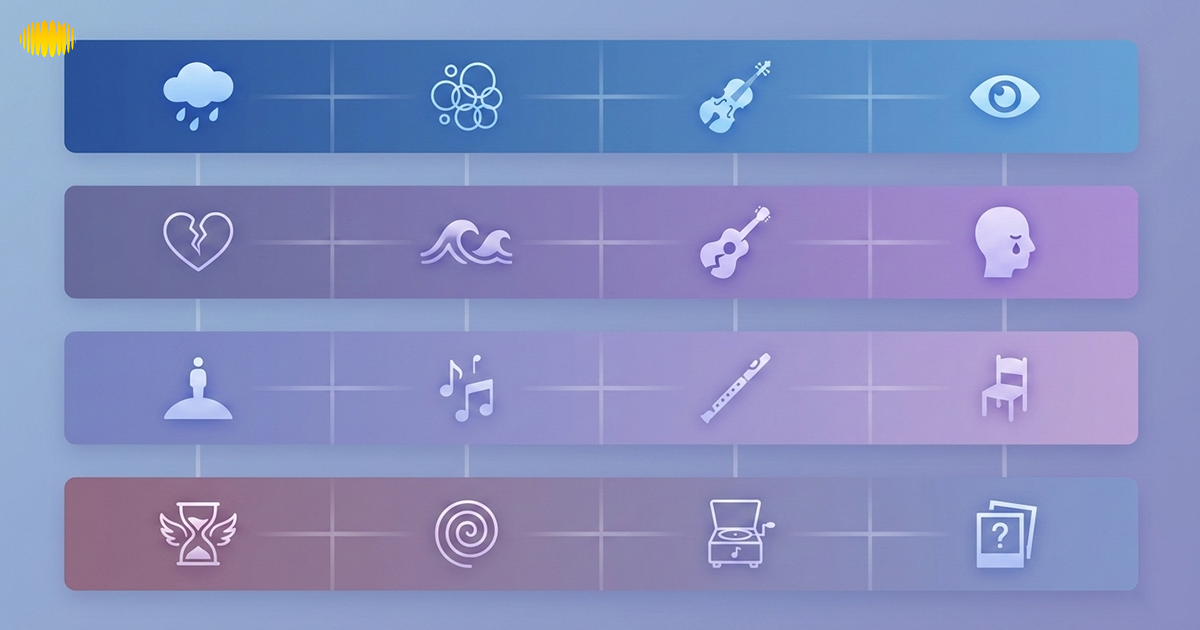
A sad track is not just slower. Sadness is a combination of music choice and writing choice that results in the same emotion.
Musical Levers that Create Sadness
Tempo
Slow is good, but the mid-tempo can be damaging. Aim for ranges:
- Ballad: 62–78 BPM
- Sad lo-fi generator vibe: 70–92 BPM
- Emo rap confessional: 90–110 BPM
Harmony And Key
Minor keys help. Chord movement matters more. As might have been expressed by a single chord in regret as by a whole fancy progression.
Space And Instrumentation
Sadness is compared to intimacy and austerity:
- Piano, soft pads, clean guitar.
- Muted drums, quiet bass.
- Reverb in a room that does not have the feeling of a stadium.
Dynamics
Let the track breathe. Let silence do a little work.
Emotion Map (Unique Creator Asset)
Apply this to drive tools that are not sad but slow.
| Emotion Target | Tempo Feel | Harmony Feel | Instrument Vibe | Lyric Pov |
|---|---|---|---|---|
| Grief | Slow, Heavy | Unresolved, Suspended | Piano + Distant Strings | “I” Or Third Person |
| Regret | Mid-Slow | Tense Turns, Half-Resolve | Guitar + Soft Pad | “You” Or “I” |
| Longing | Mid | Repeating Motif | Airy Keys + Light Drums | “I” |
| Numbness | Steady, Minimal | Simple, Flat | Lo-Fi Loop + Muted Kick | “I” |
| Relief After Loss | Slow-To-Mid | Gentle Resolve | Piano + Warm Pad | “I” |
← Swipe horizontally to view full table →
Emotional Writing Checklist
The lyrics make sense to a melancholic song generator. These are the principles that should be applied before writing and during the editing stage.
- Consider a single scene: A kitchen at 2:10 AM turns out to be even lonelier.
- Show things that can be pictured: The phone screen with a broken window. A mug with a chip. A bus card in a coat pocket.
- Create a small arc: What has altered? What did you try? What you accept.
- Show, don’t tell:
“I’m broken” is vague.
“That my hands are floating over send, and falling is real.” - Stigmatize stereotypes: No “broken heart.” No “tears fall.” No “empty room.”
Your song deserves better.
How AI Generates Sad Songs (Plain English)
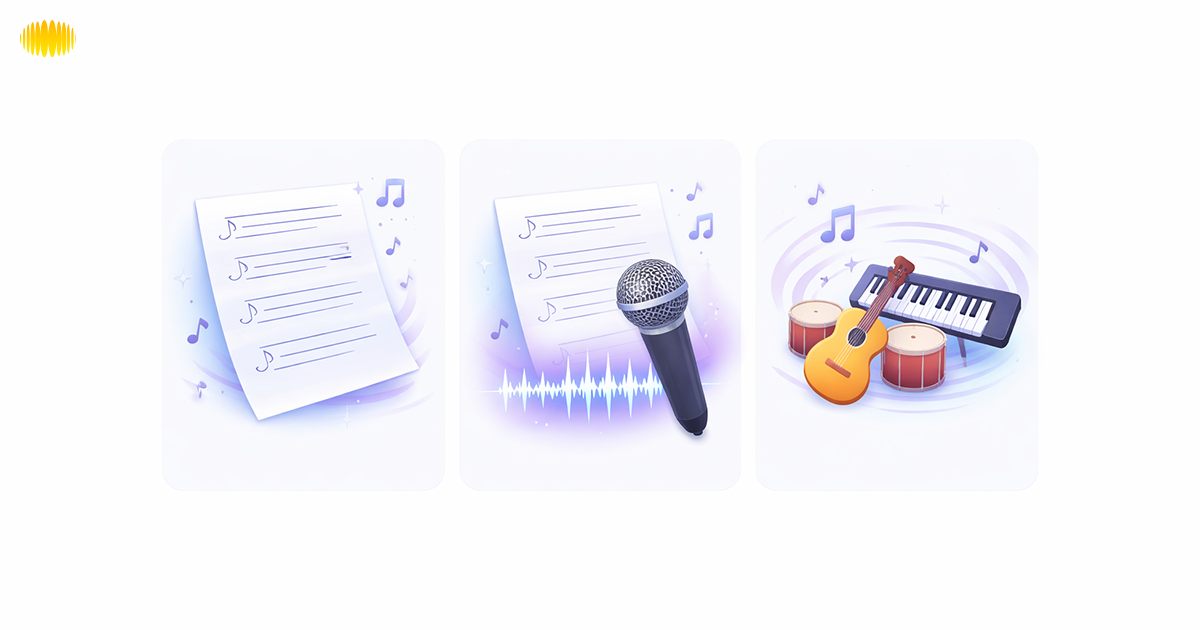
The artificially intelligent music instruments are trained based on a huge amount of music and text labels. They do not feel sadness. They assume how it generally sounds to be sad. That is why prompts are making it or changing everything. It has a short period of prompts that the model can move to a generic minor piano. Creating a prompt gives it a direction. Some copy text to a sad music generator. Others encode lyrics into audio like a lyrics-to-song generator. Some generate vocals too.
Why Iteration Matters
Emotion is a precise target. The older production only barely lands.
Plan for this:
- Generate 3–6 versions.
- Keep the best moments.
- Edit, then regenerate sections.
This is normal creative work. No shame in it.
Recommended Read: AI Song Lyrics Generator
Best Sad Song Generators (Category-Based Comparison)
This segment entails a comparison of tools on the basis of usage. Terms and licenses can change, and the policy that is present should always be reviewed before publishing.
Category-Based Tool Comparison
| Tool | Output Type | Mood Controls | Export | Commercial-Use Clarity | Sample Output Style |
|---|---|---|---|---|---|
| Sonygram | Full Song + Vocals + Instrumental | Emotion Control At The Section Level + Tonal Direction | Audio | Licensing Under Terms; Ownership Inhibited By The Platform | “Intimate Piano-Verse, Controlled Chorus Lift, Close-Mic Vocal-Sound, Soft-Sound, Undecided Ending.” |
| Suno | Full Song + Vocals | Prompt + Sections | Audio | Words Are Indicative Of Usage Limits | “Soft Vocal, Close Mix, Chorus Mix Goes Back.” |
| Udio | Full Song + Vocals | Prompt Steering | Audio | The Official Tos Governs Rights | “Breathy Verse, Hook Tight, Repeat Vocal Verses.” |
| Eleven Labs | Music Generation (Definite Options Of Vocals In Examples) | Prompt-Based | Audio | Cleared For Different Commercial Purposes. | “Indie Sad Hook, Clean Vocals, Moderately Soft Drums, Etc.” |
| Stable Audio | Instrumental | Text Prompt + Duration | Audio | Tos Is Concerned With The Usage And Licensing. | “Cinematic Sorrow Cue, Slow Swell, Sparse Hits.” |
| SOUNDRAW | Instrumental + Edit Sections | Mood, Length, Structure | Audio | Docs Issued At Time Of Licensing Are A Spelling Of Royalty. | “Depressed Lo-Fi Loop, Mellow Keys, Relaxed Loop As Well.” |
| Beatoven.ai | Instrumental Score | Emotion Tags + Structure | Audio (Plan-Based Options) | Tos And Guidance Cover Usage | “Piano-Led Bed, Mellow Ascendency & Clean Ending.” |
| AIVA | Composition (Often Midi + Audio) | Style Presets | Midi/Audio | Eula Explains Usage Rules | “Plain Piano Theme, Simple Motif.” |
| Mubert | Instrumental Beds | Tags + Length | Audio | The Agreement Of Subscription Is Elaborated | “Ambient Melancholy To Be Narrated.” |
| Boomy | Song Writing + Flow Of Distribution | Templates | Audio | Terms + Rights Pages Clarify Options | “Poor Melancholy Jeune, Simple Mestre, Simple Structure Said.” |
| Loudly | Ai Music + Licensing | Params + Workflow | Audio | License Agreement Plus Direction | “Moping Synthesis Slumber, Monotonic Throb, Diminishing Glisteness.” |
← Swipe horizontally to view full table →
Selecting Tools According to Your Real Objective
- Background Music (Creator): Stable Audio, SOUNDRAW, Beatoven, Mubert, all appropriate in the instances where clean beds are required.
- Full Vocal Demos: Sonogram, Suno, Udio, and Eleven Labs assist in the case of need for vocals and quick arrangement.
- Songwriter Building Blocks: AIVA can assist in case other MIDI and composition control issues are needed.
Reality Check of Platform (Important)
Some platforms are making tougher boundaries on AI-heavy uploads. In January 2026, Bandcamp declared that it would prohibit an AI-generated piece of music entirely or containing significant portions of AI-generated music. It does not imply that one should never use AI. It implies that you must have a strategy and you must have transparency.
Recommended Read: Best AI Music Generators
Why is Sonygram Great at Creating Emotionally Accurate Sad Songs?
Many AI music generators are capable of creating a sad sound. Even fewer can mould melancholy with plausible emotional gestures. Sonygram is unique in that it assists you in creating an emotional continuum throughout the song, rather than a one-dimensional emotion. You will be able to control the verse-chorus intensity, which is necessary in such themes as grief, regrets, heartbreak, or silent desire. The end output seems like a written product rather than a generated one.
It also does well in scene prompts.Describe a night scene, one particular memory or another, a faint shade of emotion, and the orchestration tends to reflect the turn of the direction in tempo, instrumentation, and dynamics.This prevents the generic minor-key loop issue of fast AI song generators. The other strength is vocal realism. Lighter delivery, detailing of the breath, and understated phrasing can produce intimacy, and this can be especially effective in indie ballads and confessional songwriting.
Sonygram is best for:
- Emotional demo production.
- Intimate vocal ballads.
- Cinematic melancholy cues.
- Structured songwriting drafts.
Most tools can be used in case you need speed only. Sonygram would be a better choice if you want an AI sad song generator with more emotional precision.
Prompt Templates That Produce Better Sad Songs
The prompts that produce the most generic results sound like the following:
“make a sad song, piano, slow.”
There is no scene, no point of view, no emotional object to that prompt. Tools will guess. Guessing typically becomes uninspired work.
The Sadness Prompt Stack
Use this stack every time. It is compatible with the AI sad song generator, the sad harmony generator, and the entire vocal tools.
Sadness Prompt Stack
- Scene: Place, time, one object.
- Emotion focus: Sadness, remorse, homesickness, emotional numbness, relief-of-loss.
- Tempo range: Pick range.
- Instrumentation Core sounds: 3-5.
- Formation: Intro, verse, the chorus, bridge, and outro.
- Lyric POV: I, you, we, third person.
- Limitations of imagery: No more than 2-3 concreteness.
- Proscribed cliches: Enlist 5 phrases that you reject.
- Mixed note: Near-vocal, low-level drums, low brightness.
Quick Debugger (Exceptional and Realistic)
In case of a lost output, a test with this will do:
- Too Petite, Not Sad Yet: Insert a scene with a sense of regret. Remove “sad” as a word.
- Vocally Devoid of Emotion: Request close mic, breathe, minor cracks, light polish.
- Too Dramatic: Cut strings. Request fewer instruments and silence.
- Almost A Sounding Pop Song: Define the structure and prohibit these uplifting resolutions.
- Lyrics Seem Unnatural: Compel 3 items, a single time, a single motion.
Copy/Paste Prompt Packs
1) Sad lo-fi journaling loop (Sad Lo-fi Generator)
Produce a 70-88 BPM lo-fi loop that is comparable to a late-night journal. Minor. Hot Rhodes, thick vinyl noises, straight-forward kick and snare, mellow bass, and low-pitched guitar harmonics. No big melody. Space for voiceover. Loop clean. Avoid a hopeful lift.
Recommended Read: What Is Lofi Music?
2) Piano ballad heartbreak (Sad Piano Music Generator)
Follows 62 to 74 BPM piano ballad. Sparse arrangement. Piano, soft pad, far flung strings, light brush drums. The chorus sings a little, then sings down. Lyrics in first person. Setting: light in the kitchen, broken mug, incomprehensible writing. Ban: heartbroken, wept, empty, rain on the window, you had been everything to me.
3) Cinematic Sorrow Score
Develop a movie melancholy signal at 68-80 BPM. Low strings, subdued trumpet, quiet hits, and aggregated piano. Create tension in between, emanate into silent acceptance. No heroic ending. Interstantiability in the last 10 seconds.
4) Emo Rap Confessional Verse
Technology produces 90-105 BPM emo rap hooks and verses. Dark, clean drums. Minor guitar loop. Almost spoken and vocal close. Lyrics: never delivered a second-person message. Hook stays short. Ban: I will never be able to live without you. You were my everything, shattered heart.
Recommended Read: AI Rap Lyrics Generators
5) Acoustic Indie Melancholia
Produced a set of acoustic indie with 72-92 BPM. Asthmatic guitar, smooth bass, light percussion. Vocal imperfect and close. Lyrics: third-person narration on how two individuals go by in a grocery aisle and do not utter any words. Ending unresolved.
Editing Workflow (Make AI Output Feel Human)
This is where you trump competitors. Tool pages stop at “generate.”
Creators win at “edit.”
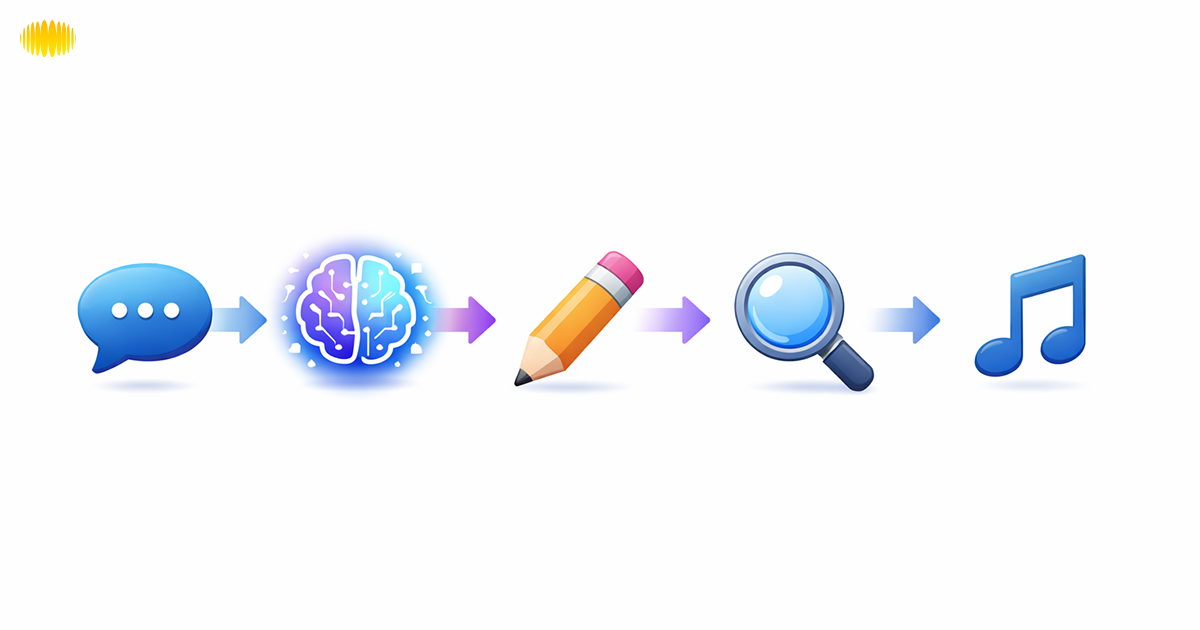
Lyrics Editing
The two weaknesses of AI lyrics are general emotion and one-dimensional rhythm.
Use this three-page edit:
Pass 1: Replace Vague Emotion
- I’m alone, lonely, sitting by the phone.
Pass 2: Tighten lines
- Cut filler words.
- Let one short line land hard.
Pass 3: Fix Structure
- Verse moves the story.
- The wound is named by Chorus from one angle.
- The bridge alters the point of perception or time.
Mini Rule: there is one repeating image in the sections; however, every time the image moves.
Arrangement Editing (If Audio Is Generated)
Sound equipment enjoys empty spaces. Sadness needs restraint.
Try This:
- Regenerate only the weak section, not the whole track.
- Remove one instrument.
- Rower drum energy.
- Shorten hook.
- You can record your own vocals, and if you intend a serious release.
Even an imperfect human voice alters the level of trust very quickly.
Originality & Similarity Safety
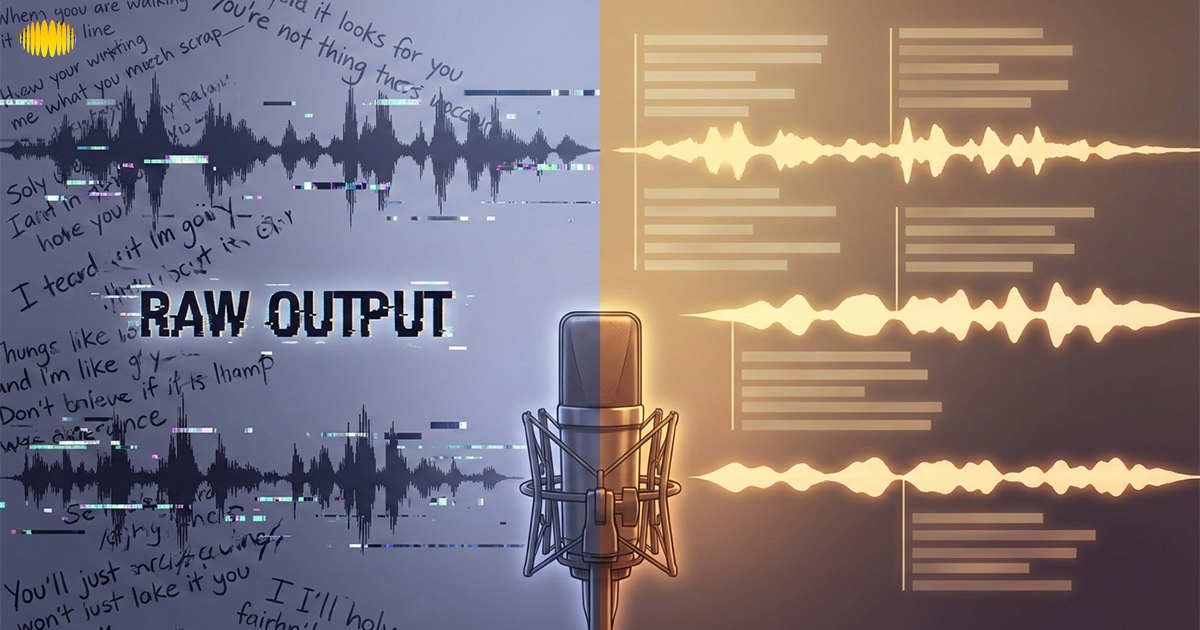
Use AI output as raw work, which does not comply with the final product.
- Generate multiple drafts, and borrow the finest elements of drafts.
- Rephrase unique significant expressions.
- Redefine chord rhythm, melody contour in case of rebuilding.
- Save notes on your edits.
It is the way to eliminate similarity risk without panicking.
Rights & Licensing Checklist Before Publishing
This part matters. The misunderstanding of royalty-free sad music is prone to error.
Rights Checklist (Practical)
- The license and ToS that I have read were those of my plan tier.
- My application is personal, client work, ads, and streaming.
- I stored evidence of my plan level when it was generated.
- I did not use prompts that mention or refer to living artists or similar questions.
- I did human modifications: lyrics rewrites, edits, performance, and arrangement.
- I have examined where I will post on the platform.
The January 2026 rule of Bandcamp is an example of platform policy risk.
License vs Copyrightability
License means permission. Copyright refers to the legal safeguarding of authorship.
The Copyright Office directions in the US are part of the human authorship and require one to disclose AI-generated work at the time of registering a work. The human-authorship requirement has also been supported by courts in some cases, such as Thaler v. Perlmutter.
The license of the output can be granted via a platform, but that does not necessarily imply that the copyright is owned. Countries and platforms differ in rules, policies of the platform differ. Look at your local rules as the ceiling. Provided you publish across boundaries, you must keep a record of your human input and the nature of the license.
Voice & Digital Replica Risks
There is a high risk when prompting and voice imitation are done in a celebrity style.
Safer Path:
- Use your own voice.
- Use an authorized voice.
- Hire a vocalist.
Partnership announcements demonstrate that the industry's going to licensed environments, and sound like a celebrity still triggers takedowns and controversy.
Recommended Read: Technical Challenges and Ethical Issues in AI Music Generation
Frequently Asked Questions (FAQ’s)
1. What Is a Sad Song Generator?
A sad song generator is an artificial intelligence (AI) application that generates music content that is emotion-driven. It is capable of writing lyrics, creating a complete song with vocals, or creating instrumental background music. Creators, songwriters, and marketers in the US market utilize these tools extensively to create fast drafts or mood audio.
2. What’s The Difference Between a Sad Music Generator and A Sad Song Generator?
Only instrumental pieces are typically generated by a sad music generator, including piano, lo-fi, or movie background music. A sad song generator can have lyrics, melody, and vocals as well as a complete structure. The usage of a song generator in the US is often understood to mean a full song, whereas a music generator is towards instrumentals.
3. Can AI Generate Sad Songs with Lyrics and Vocals?
Yes. Several AI engines produce entire songs comprising written lyrics, singer vocals, background music, and formatted segments such as verses and choruses. Suno or Udio are some of the tools employed by many creators in the US. Human editing and vocal refinement usually result in improved results.
4. Why Do AI Sad Songs Sound Generic?
A generic response tends to occur when prompts are not detailed. Simple instructions, such as making a sad song, do not provide a lot of guidance to the system. The outcome is one-dimensional or monotonous. Clarity, definite feelings, and revision passes enhance quality. The generic feel is also decreased by editing the lyrics and altering the structure.
5. Can I Use AI-Generated Music Commercially?
Sometimes. The platform is subject to licensing and subscription levels. Some US-based tools can be monetized according to paid plans, and free ones might limit commercial rights. Be sure to examine the existing Terms of Service and make a copy of your intention to post content on streaming platforms or client projects.
6. Is AI-Generated Music Copyrighted?
In the US, copyright must involve a real human effort. Full protection may not be available to fully automated AI output. When a composer modifies the lyrics, alters form, captures vocals, or introduces a new composition, the argument is more solid. The US Copyright Office mandates AI involvement disclosure.
7. How Do I Reduce Similarity or Plagiarism Risk?
Create several drafts and assemble the best parts. Edit chord sequences, modify melody patterns, and rewrite. Do not imitate original expressions. AI output is a rough product that should not be released. Document your edits. This procedure reduces the risk of similarity and enhances originality in accordance with the US standards.
8. Should Creators Avoid AI Voice Imitation?
Yes, in most situations. The impersonation of a voice or a personality of a celebrity may give rise to legal conflicts and a platform shutdown in the United States. The rights of voice likeness are not ignored. Safety alternatives can be to use your own voice, employ a vocalist, or employ licensed and approved voice models.
Wind Up
A sad song generator is very quick; however, emotions cannot be generated quickly. Clear prompts help a lot. Minor facts are better than large assertions. Edit the weak lines. Keep the honest ones. You need to check your license before publishing. Add your own voice or tweaks. Let AI build the base. You fashion the emotion and bring it into being.
Recommended Read: Meaningful Funeral Songs For The Older Generation